
Can you apply ceramic coating on a matte finish car?
 ead admin
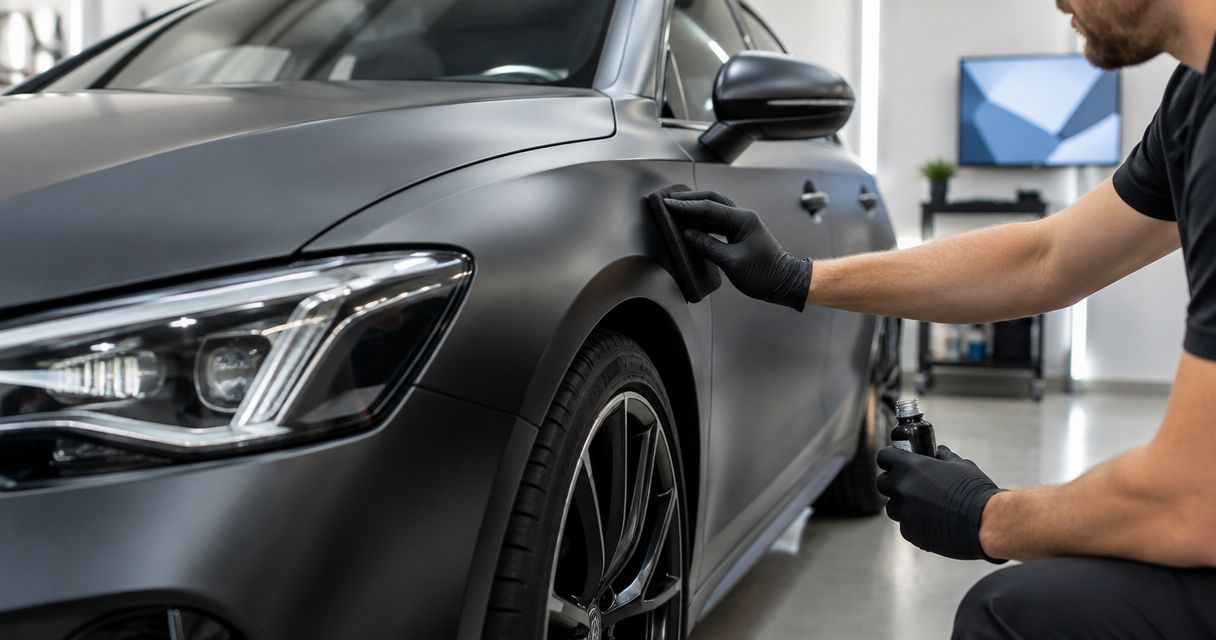
Yes, you can apply ceramic coating on a matte finish car, provided the coating is explicitly approved for that surface and does not create unwanted gloss. The main caveat is preparation: conventional paint polishing can permanently change a matte finish, so the installer must clean and assess the surface without treating it like gloss paint.
- Can you apply ceramic coating on a matte finish car? Yes, with a coating approved for your exact surface.
- Matte paint, satin PPF and matte vinyl require separate compatibility checks; they are not interchangeable surfaces.
- Ceramic coating helps with cleaning but does not replace PPF for physical impact protection.
- EA Detailer provides professional ceramic coating and paint protection services for Singapore car owners.
Why this matters
Matte paint depends on its surface texture to scatter light rather than produce a sharp reflection. Abrasive polishing changes that texture. A shiny patch is therefore not simply dirt that needs another wash; it can be a change to the finish itself.
Preserving the original sheen takes priority over adding a coating. For your 2026 protection plan, judge the product by documented compatibility and the installer’s preparation method, not by claims about shine. Start with the selection criteria in this guide to ceramic coating for matte finish cars.
Can you apply ceramic coating on a matte finish car?
Yes. A suitable ceramic coating adds a protective surface treatment without requiring the paint to be polished to a gloss first. Suitability depends on the exact coating, the underlying finish and the condition of the panel.
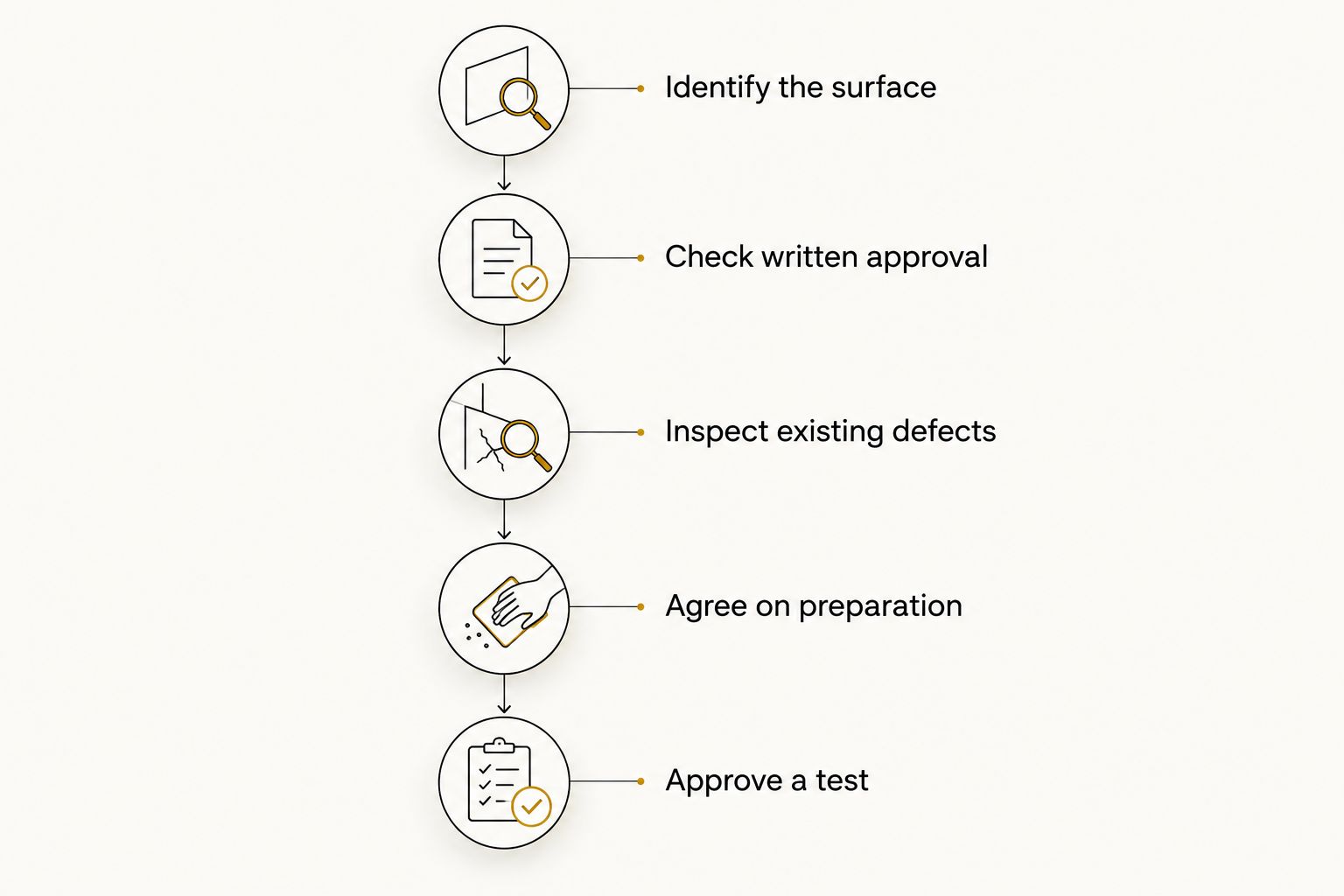
Use this sequence before authorising an application:
- Identify the surface. Establish whether you have factory matte paint, a matte repaint, satin PPF or matte vinyl. The visible appearance alone does not establish compatibility.
- Check written approval. Ask for the coating manufacturer’s instructions covering your surface type. A general reference to paint protection is not enough.
- Inspect existing defects. Record stains, shiny patches, scratches and previous treatments before cleaning begins. Coating is not a correction method for those defects.
- Agree on preparation. Specify cleaning and decontamination methods approved for the finish. Do not accept a standard gloss-paint polishing stage by default.
- Approve a discreet test. Assess the dried result under different lighting before treating visible panels. Follow the manufacturer’s application and curing instructions.
A test area checks appearance and application behaviour; it does not override a manufacturer’s restriction. If the product documentation excludes matte finishes, choose a different product rather than relying on a successful-looking demonstration.
Factory matte paint: preserve the existing texture
Best for: owners who want to retain the appearance of their original matte paint while making routine cleaning more manageable.
Factory matte paint is not gloss paint waiting to be corrected. Its low-sheen appearance is intentional, and the vehicle manufacturer’s care instructions should govern the preparation process.
A compatible coating can provide water-repellent behaviour and help reduce contaminant adhesion. The limitation is equally important: ceramic coating does not make matte paint scratch-proof, eliminate water spotting or repair existing damage.
For a new-car handover in 2026, ask the dealer whether any wax, dressing or protective treatment has already been applied. Give that information to the installer so preparation addresses the actual surface rather than an assumed untreated finish.
Matte PPF: check the film and coating together
Best for: owners who already have matte or satin paint protection film and want an approved surface treatment over it.
Film compatibility is a separate question from paint compatibility. Confirm that the coating is approved for the installed film, and check that its application and maintenance requirements do not conflict with the film manufacturer’s instructions.
The advantage is a coating’s cleaning-related function over an existing physical barrier. The limitation is that a coating cannot correct lifting edges, trapped contamination or damaged film. Resolve installation defects before adding another treatment.
If you are comparing XPEL PPF options, identify the exact film rather than treating every finish as equivalent. The same principle applies to ChromaGard colour PPF: establish which surface will receive the coating. Read the separate guide on applying ceramic coating over PPF before combining treatments.
Matte vinyl: require wrap-specific approval
Best for: owners preserving the appearance of an existing matte vinyl wrap rather than changing the underlying paint.
A matte vinyl wrap needs a coating approved for that material. A product suitable for painted panels is not automatically suitable for vinyl, and paint preparation products should not be transferred to a wrap without checking their instructions.
The benefit is easier routine care when the materials are compatible. The drawback is another compatibility requirement: the coating, cleaning chemicals and application method must all suit the wrap.
If the wrap already has lifting edges, staining or uneven sheen, document those conditions first. Do not treat a coating as a way to conceal ageing material or avoid a necessary repair.
How do the matte surfaces compare?
Use this comparison when discussing a 2026 booking. The right choice follows the surface already on your car, not a general preference for one protection category.
| Surface | Best for | Coating’s role | Main limitation |
|---|---|---|---|
| Factory matte paint | Preserving the original painted appearance | Add an approved protective surface treatment | Abrasive preparation can change the sheen |
| Matte or satin PPF | Maintaining an existing protective film | Support cleaning over compatible film | Cannot repair film damage or installation defects |
| Matte vinyl | Maintaining an existing colour-change wrap | Support cleaning with wrap-approved chemistry | Paint-only compatibility is insufficient |
Choose by substrate first and product second. Calling all these surfaces matte does not make their care requirements identical. Keep the vehicle, film or wrap care instructions alongside the coating instructions so any conflict is resolved before work starts.
Why matte coating results vary
A satisfactory result depends on more than the coating bottle. These factors determine whether the finished surface remains visually consistent:
- Underlying material. Painted clearcoat, protective film and vinyl require their own compatibility checks.
- Existing condition. Coating does not erase scratches, established stains or areas already polished to a different sheen.
- Previous treatments. Residual wax, dressing or an earlier coating can affect preparation and the final appearance.
- Application control. Uneven application or incomplete residue removal can leave visible patches, particularly under directional lighting.
- Curing conditions. Follow the product’s requirements for moisture exposure, handling and washing rather than using a generic timetable.
- Maintenance products. Gloss-enhancing cleaners, waxes and dressings can alter the appearance you are trying to preserve.
Ask the installer to explain each factor against your car. A useful assessment distinguishes removable contamination from an actual change in texture; those problems do not have the same remedy.
What should preparation include without polishing?
Preparation should remove contamination while preserving the finish. Begin with an inspection, then use the vehicle or surface manufacturer’s approved washing and decontamination methods. Cleaning thoroughly does not require polishing automatically.
Chemical compatibility matters. Do not assume a solvent, fallout remover or panel preparation product is suitable merely because it is commonly used on gloss paint. Check the instructions and assess a discreet area where required.
Mechanical decontamination also deserves scrutiny. Clay and other abrasive contact methods can mark sensitive finishes, so an installer should explain why a proposed method is suitable rather than describe it as a routine package step.
Before application, inspect the dry surface under diffuse and directional light. Water can temporarily disguise unevenness. Agree on the existing condition while the panel is clean and dry, not after the coating has already been installed.
Will ceramic coating make matte paint shiny?
A matte-approved coating should preserve the intended low-sheen appearance, but product compatibility must be confirmed. Do not accept an unconditional promise that every ceramic coating is invisible on every matte surface.
Cleanliness itself can change how a panel looks. Removing road film can reveal a richer colour, while unsuitable product residue can create unwanted sheen. Assess the test area after the specified application process, not while it is still wet.
Photograph the untreated and treated areas under matching light. Ask the installer to stop if the test produces an unacceptable difference; extending the application across the car is not a remedy for a failed appearance check.
Can ceramic coating remove scratches from matte paint?
Ceramic coating does not remove scratches from matte paint. It is a protective treatment, not a substitute for restoring damaged paint or replacing damaged film.
Conventional scratch correction often involves abrasion. On a matte finish, that can change the local texture and create a conspicuous sheen difference even if the scratch becomes less visible.
Have the damage assessed before choosing protection. The appropriate remedy depends on whether the defect affects paint, film or vinyl, and whether the original finish can be restored without an obvious mismatch.
Is ceramic coating enough to prevent stone chips?
Ceramic coating is not a substitute for PPF when physical impact protection is the priority. Coating and film perform different jobs: a surface treatment does not provide the same sacrificial material barrier as protective film.
For a performance car used on track or a daily driver exposed to road debris, separate cleaning requirements from impact-protection requirements. Neither treatment makes the car immune to damage.
For your 2026 specification, decide which risk you are addressing before selecting a package. A matte appearance does not change the distinction between easier cleaning and physical protection.
What should you ask an installer before booking?
EA Detailer suits Singapore car owners seeking professional ceramic coating and paint protection services. For a matte-finish enquiry, make documented compatibility the starting point rather than assuming any listed coating suits your car.
Ask EA Detailer which exact coating is proposed, what written instructions support its use on your finish, and how preparation will avoid unwanted sheen. Request a clear explanation of limitations as well as the intended result.
Before signing off, confirm:
- The exact surface being treated, including any replacement or repainted panels.
- The proposed cleaning method and whether any abrasive process is included.
- How the test area will be assessed and approved.
- The product-specific curing and first-wash instructions.
- The procedure for reporting patches, residue or other concerns after collection.
For any installer you assess in 2026, a named product is only the start. The preparation method and handover instructions must also fit your finish.
FAQ
Can you apply ceramic coating on a matte finish car without making it glossy?
Yes, provided the coating is approved for the exact matte surface and applied according to its instructions. Confirm the appearance on a discreet test area before treating visible panels.
Can I use the same ceramic coating on gloss and matte paint?
Only if the coating manufacturer explicitly approves both applications. A product described simply as ceramic coating does not establish matte compatibility.
Should matte paint be polished before ceramic coating?
Matte paint should not receive conventional gloss-enhancing polishing as a routine preparation step. Abrasion can change the surface texture and leave a shiny patch.
Can ceramic coating stop water spots on matte paint?
Ceramic coating does not eliminate water spotting. Water-repellent behaviour does not stop dissolved minerals from remaining when droplets dry.
How soon can I wash a matte car after ceramic coating?
Wash the car only after the coating manufacturer’s specified waiting period. Get the instructions for the exact product at handover rather than using a generic schedule.
Can ceramic coating go over satin paint protection film?
Yes, when the coating is approved for the installed film and its finish. Check both manufacturers’ instructions before combining the treatments.
What should I do if a matte panel looks patchy after coating?
Ask the installer to assess the panel before attempting removal or correction. Do not reach for polish, because an abrasive repair can permanently change the matte appearance.
One last thing
Do not approve the finish only under workshop lighting. Inspect the dry car in daylight as well, looking across broad panels and around edges for uneven sheen or residue. Directional light can reveal differences that diffuse light hides.
Keep photographs and the exact product name with your service record. For a matte car, those details help the next person cleaning or repairing the surface avoid treating it like ordinary gloss paint.
Related guides
- Can you drive right after a ceramic coating application?
- How often should you wash a car with ceramic coating?
- Can you remove ceramic coating once it is applied?

Leave a Reply